Gloster Meteor F.8
Gloster Meteor F.8
Couldn't load pickup availability
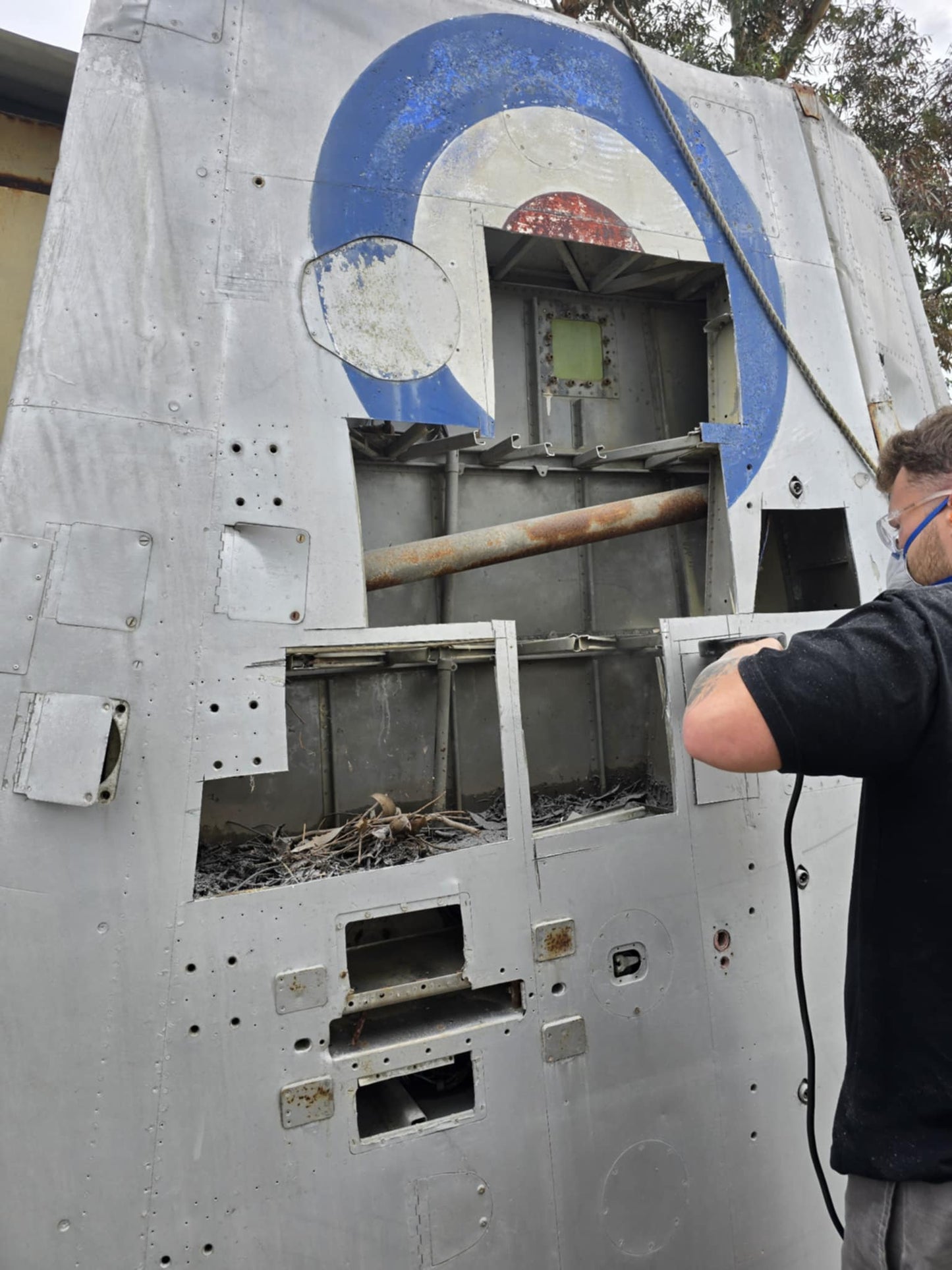
Our Gloster Meteor F.8 – RAAF TransportTag was crafted from RAAF Meteor F.8 serial A77-867 (built as RAF WK685 and taken on RAAF charge 20 August 1952). It served with No. 77 Squadron at Kimpo, South Korea, flying fighter patrols, escort, and ground-attack sorties during the final stages of the Korean War and the post-armistice period. In December 1955 the aircraft returned to Australia for training and reserve duties with Nos. 77, 78, and 22 Squadrons.
After retirement, the airframe became a fire-training target at Point Cook. Rescued for display at Moorabbin Air Museum, its original wingtip—replaced during restoration by a better-condition part—was used for years as the museum’s iconic “OPEN” sign. The airframe now resides with Classic Jets at Parafield. In 2025 we acquired this very wingtip from Moorabbin, and in early 2026 we carefully upcycled it into your TransportTag.
Each piece is an authentic fragment of RAAF Meteor history and a living connection to the Korean War. And as with every tag purchase, please allow at least 1 to 2 weeks for delivery - and longer (2-3 weeks) if personalization is requested at checkout.
(Please note that Transport Tags LLC is NOT an authorized or licensed distributor of the Gloster Aircraft Company, or the RAAF, and uses their name, markings, etc., for identification purposes ONLY in accordance with the Lanham Act).
Vehicle History
Vehicle History
The Gloster Meteor F.8 was produced by the Gloster Aircraft Company, a pioneering British firm based in Hucclecote, Gloucestershire, renowned for its contributions to early jet aviation. Developed as an evolution of the original Meteor, which was the Allies’ first operational jet fighter during World War II, the F.8 variant emerged in the post-war era to address performance limitations of earlier models. Initiated in the late 1940s, its design incorporated significant upgrades, including a more powerful Rolls-Royce Derwent 8 engine, strengthened airframe, and improved armament capabilities, making it a formidable interceptor and ground-attack aircraft. Gloster’s engineers focused on enhancing speed, climb rate, and maneuverability, resulting in a top speed exceeding 600 mph and the ability to operate effectively at higher altitudes.
The development of the Meteor F.8 was driven by the Royal Air Force’s need for a versatile jet fighter amid the escalating Cold War tensions. Building on the Meteor’s wartime debut in 1944, where initial variants like the F.1 and F.3 were used primarily for intercepting V-1 flying bombs, the F.8 represented a mature refinement with features such as a pressurized cockpit, ejection seat, and four 20mm Hispano cannons. Over 1,000 F.8s were manufactured between 1949 and 1954, reflecting Gloster’s expertise in transitioning from piston-engine to jet propulsion technology. This model also saw export success, with variants adapted for foreign air forces, including those of Australia, Belgium, and Brazil, showcasing its adaptability and the company’s global influence.
In operational use, the Gloster Meteor F.8 played a key role in conflicts like the Korean War, where Royal Australian Air Force units employed it for ground-attack missions against North Korean targets, proving its reliability in combat despite being outpaced by newer jets like the MiG-15. It served primarily with the RAF until the mid-1950s, transitioning to roles in training, reconnaissance, and even as target tugs before retirement. The F.8’s legacy endures as a symbol of Britain’s early jet age innovation, with surviving examples preserved in museums worldwide, highlighting Gloster’s pivotal role in aviation history and the aircraft’s enduring impact on modern fighter design.
Product Specifics
Product Specifics
Back of tag will be blank, unless customization is chosen at time of purchase.
Vehicle Stats
Vehicle Stats
• Manufacturer: Gloster Aircraft Company, United Kingdom
• Role: Single-seat jet fighter/interceptor
• First Flight (F.8 Variant): 1948
• Introduction into Service: 1950 (Royal Air Force)
• Crew: 1 (pilot)
• Length: 44 ft 7 in (13.59 m)
• Wingspan: 37 ft 2 in (11.32 m)
• Height: 13 ft 0 in (3.96 m)
• Wing Area: 350 sq ft (32.52 m²)
• Empty Weight: 10,684 lb (4,846 kg)
• Maximum Takeoff Weight: 15,700 lb (7,121 kg)
• Powerplant: 2 × Rolls-Royce Derwent 8 turbojet engines, each producing 3,600 lbf (16 kN) thrust
• Maximum Speed: 600 mph (965 km/h, Mach 0.82) at sea level
• Range: 600 mi (965 km) on internal fuel
• Service Ceiling: 43,000 ft (13,100 m)
• Rate of Climb: 7,000 ft/min (35.6 m/s)
• Armament: 4 × 20 mm Hispano Mk V cannons (with 195 rounds per gun); provisions for up to 16 × 60 lb (27 kg) rockets or 2 × 1,000 lb (454 kg) bombs under wings
• Avionics/Features: Pressurized cockpit, Martin-Baker ejection seat (later models), radar gunsight
Product Dimensions
Product Dimensions
Card Dimensions
Length: 5 1/2"
Width: 3 1/2"
Tag Dimensions
Length: 3"
Width: 1.75"
Thickness:
Regular Tags: 1.3mm - 6.8mm
Thick Tags: 9.1mm - 10.5mm
Disclaimer
Disclaimer
TransportTags are unique, handcrafted pieces made from genuine vehicle skin. Features like scratches, blemishes, or minor discolorations testify to their unique vintage appeal and authenticity. By purchasing, you accept the product may differ slightly from website images. Transport Tags LLC uses authentic material from transportation vehicles, potential containing hazardous substances. Not intended for ingestion, inhalation, or use by small children. Transport Tags LLC is an independent company, not affiliated with, sponsored or endorsed by any entities. We use branded names and insignia for identification under the provisions of the Lanham Act, without implying any association or endorsement. For more information, read our detailed product safety and legal information here.
Share